
National workshop adopts Bhubaneswar Declaration to strengthen Tribal Research Institutes
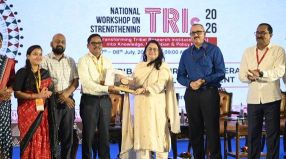
Bhubaneswar, July 8 (TNT): A two-day National Workshop on Strengthening Tribal Research Institutes (TRIs), organised by the Union Ministry of Tribal Affairs in collaboration with the Odisha Government, concluded on Wednesday with the adoption of the Bhubaneswar Declaration, laying out a national roadmap to strengthen Tribal Research Institutes as centres of excellence in research, knowledge generation and evidence-based policymaking.
The workshop brought together nearly 200 participants from Tribal Research Institutes, State Tribal Welfare Departments, academia, research institutions, technology organisations, industry, development partners and civil society to deliberate on strengthening India’s tribal research ecosystem.
The declaration aims to advance the vision of Viksit Bharat@2047 by promoting stronger institutions dedicated to tribal knowledge, research, innovation, cultural preservation and policy support.
During the two-day deliberations, participants discussed transforming Tribal Research Institutes into knowledge and cultural resource centres, preserving tribal languages and indigenous knowledge systems, strengthening evidence-based research, integrating technologies such as Artificial Intelligence and Geographic Information Systems (GIS), and improving governance, institutional capacity and strategic partnerships.
Addressing the concluding session, Ms. Ranjana Chopra, Secretary, Ministry of Tribal Affairs, said Tribal Research Institutes must evolve into globally recognised centres of excellence rooted in community realities and supported by greater institutional and financial autonomy.
She said the institutes should work closely with state governments, universities, multilateral organisations and other knowledge institutions to bridge the gap between research, policy and tribal communities.
The workshop also emphasised strengthening governance structures, developing skilled human resources, standardising research methodologies and promoting greater collaboration among Tribal Research Institutes across states.
The Ministry presented Certificates of Appreciation to seven Tribal Research Institutes for outstanding contributions to tribal research, documentation and preservation of tribal cultural heritage.
The awardees were the Tribal Research and Training Institute, Chhattisgarh; Scheduled Castes and Scheduled Tribes Research and Training Institute, Odisha; Tribal Research and Cultural Institute, Tripura; Tribal Research and Training Institute, Maharashtra; Kerala Institute for Research, Training & Development Studies of Scheduled Castes and Scheduled Tribes, Kerala; Tribal Cultural Research and Training Institute; and Dr Ramdayal Munda Tribal Welfare Research Institute.
The Bhubaneswar Declaration proposes adoption of the Model TRI Framework 2030, formulation of a National TRI Research Agenda (2027-2032), greater technology integration, preservation of tribal languages and indigenous knowledge, performance-based institutional strengthening, strategic partnerships and enhanced community participation.
Concluding the workshop, Anant Prakash Pandey, Joint Secretary, Ministry of Tribal Affairs, said the recommendations and the Bhubaneswar Declaration provide a clear roadmap for enhancing institutional capacities, promoting research excellence and fostering collaboration to strengthen tribal development across the country.
TNT KS