IIT Guwahati researchers develop biological method to treat textile wastewater
Guwahati, Sept 16 (TNT): Researchers at the Indian Institute of Technology (IIT) Guwahati have developed a biological approach to treat textile wastewater containing toxic azo dyes, demonstrating 98.50 per cent degradation of Direct Blue-6 (DB-6) using a novel bacterium.
The researchers found that the bacterium, Brevundimonas sp. AJZ05, was capable of degrading DB-6, a widely used synthetic dye, while the degradation products were found to be non-toxic after bacterial treatment, the Institute said in a release on Wednesday.
The study provides a scientific basis for developing biological treatment systems for textile wastewater and could offer an eco-friendly alternative or complementary approach to conventional chemical and physicochemical treatment methods.
The bacterium was isolated from a native textile effluent discharge site and was found to produce azoreductase, an enzyme capable of attacking the azo bond responsible for the colour and chemical stability of such dyes.
Using a statistical multi-objective optimisation approach based on Response Surface Methodology, the researchers simultaneously optimised dye degradation and azoreductase production.
Under optimised conditions, the bacterium achieved 98.50 per cent degradation of DB-6 and an azoreductase activity of 0.761 U/mL.
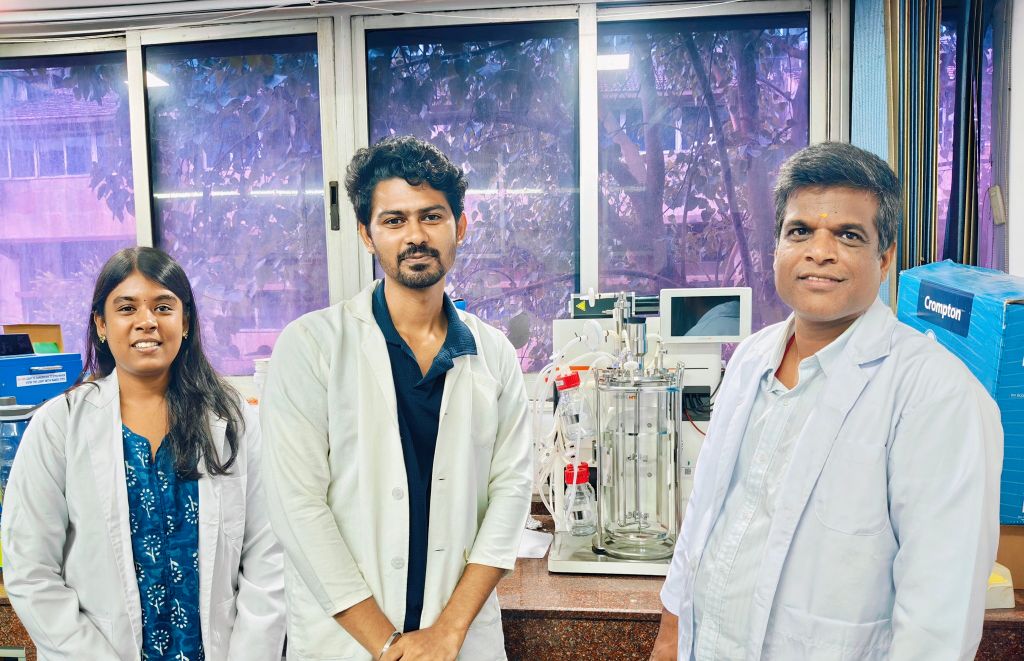
Dr Selvaraju Narayanasamy, Associate Professor, Biochemical and Environmental Engineering Laboratory, Department of Biosciences and Bioengineering, IIT Guwahati, said the study went beyond measuring colour removal by analysing the metabolites produced during biodegradation and assessing their toxicity.
He said the degradation products were found to be non-toxic after bacterial treatment, indicating the potential of the process to transform the dye into safer compounds rather than merely removing its visible colour.
The researchers are now working towards translating the laboratory findings into a scalable wastewater treatment technology. The next stage involves immobilising Brevundimonas sp. AJZ05 in a suitable support matrix to improve its stability, operational performance and reusability, followed by development of a continuous treatment system for azo-dye removal.
The bacterium was also found to tolerate several metal ions, a characteristic that could be useful in treating industrial wastewater containing multiple contaminants.
The findings were published in the peer-reviewed journal Environmental Geochemistry and Health. The study was co-authored by Ajithkumar Veluchamy, Jothika Jeyabalan and Dr Selvaraju Narayanasamy of IIT Guwahati and Dr Ankur Verma of IIT (BHU), Varanasi.
The research was supported by the Ministry of Education through the Prime Minister’s Research Fellowship, with support from the Department of Chemical Engineering and Technology, IIT (BHU), Varanasi.
TNT KM