Modi Govt’s 12 Years Marked by Welfare, Infrastructure and Transparent Governance: Dr K. Laxman
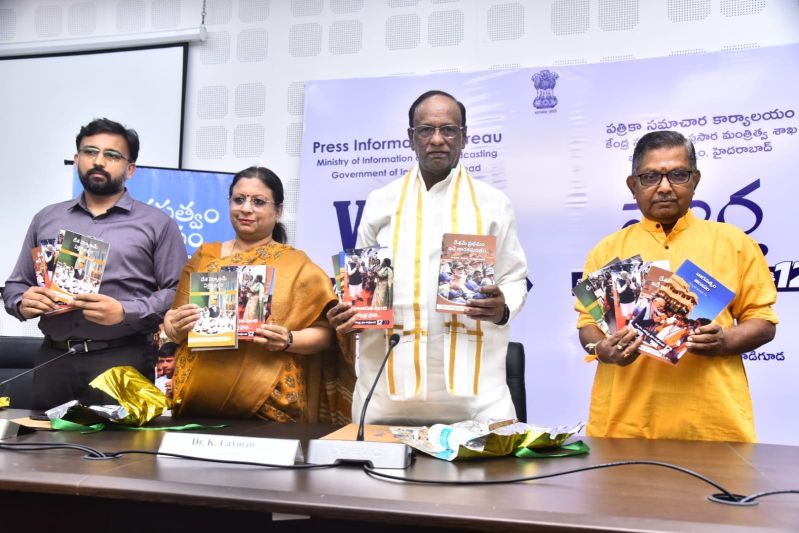
Hyderabad, June 20 (TNT): Rajya Sabha Member Dr K. Laxman on Saturday said the last 12 years under the leadership of Prime Minister Narendra Modi have been marked by unprecedented progress in welfare delivery, infrastructure development, women’s empowerment and transparent governance.
Addressing the ‘VARTA’ media interaction programme organised by the Press Information Bureau (PIB) here, Dr Laxman highlighted several flagship schemes, including Pradhan Mantri Awas Yojana, PM SVANidhi, PM Mudra Yojana, Pradhan Mantri Ujjwala Yojana, Ayushman Bharat and Pradhan Mantri Jan Dhan Yojana, which he said had transformed the lives of crores of people, particularly the poor, women and marginalised sections.
He said more than 11 crore women had benefited from the Ujjwala scheme, while the Swachh Bharat Mission had improved sanitation and enhanced dignity and safety for citizens.
He also pointed to the distribution of free food grains to over 81 crore beneficiaries and expanded healthcare access through Ayushman Bharat.
Dr Laxman said technology-driven governance supported by the Jan Dhan-Aadhaar-Mobile (JAM) framework had ensured direct benefit transfers, reduced leakages and eliminated middlemen.
He claimed that nearly 25 crore people had been lifted out of poverty through targeted welfare interventions over the past decade.
Highlighting infrastructure development in Telangana, he said the state had witnessed rapid expansion of its national highway network, with around 5,000 kilometres of additional highways developed during the last 12 years at an investment exceeding ₹1.20 lakh crore.
He also cited significant investments in railway infrastructure, including the redevelopment of Secunderabad Railway Station, development of the Cherlapalli Terminal, establishment of a railway manufacturing unit at Kazipet and proposed rail connectivity projects linking Medak, Siddipet and Komuravelli.
The BJP leader further noted that Telangana had benefited from multiple Vande Bharat Express services and proposed high-speed rail corridors connecting Hyderabad with Bengaluru, Chennai and Pune.
He also referred to Centre-backed airport projects in Mamnoor and Adilabad.
Stating that the government’s vision was guided by the principle of “Sabka Saath, Sabka Vikas, Sabka Vishwas, Sabka Prayas,” Dr Laxman said India was steadily progressing towards the goal of becoming a developed nation through inclusive growth and welfare-oriented governance.
Speaking on the occasion, senior journalist Kasturi Raka Sudhakar Rao stressed the importance of effective communication and direct public engagement in governance.
He said digital platforms, including government portals, social media and the Prime Minister’s ‘Mann Ki Baat’ programme, had transformed public outreach and enabled direct interaction between governments and citizens.
He also underlined the role of digital media in promoting education, preserving cultural heritage and strengthening public awareness, while cautioning against the misuse of online platforms for spreading misinformation.
In her inaugural address, PIB Additional Director General Shruti Patil said the workshop was aimed at promoting knowledge sharing, professional development and capacity building among media professionals, particularly those from Tier-II and Tier-III cities.
She said the programme would facilitate discussions on major government policies and developmental initiatives undertaken over the past 12 years and their impact at the grassroots level.
Patil urged journalists to actively participate in the deliberations and contribute to the dissemination of accurate and credible information.
TNT TS