
CSIRHyderabad: CSIR-CCMB scientists discover dual-action ‘viral alarm switch’ protein DZIP3 in human cells
Hyderabad, Oct 22 (TNT): Scientists at the CSIR-Centre for Cellular and Molecular Biology (CSIR-CCMB) in Hyderabad have discovered a cellular mechanism that enables human cells to detect invading viruses and rapidly mount an immune defense.
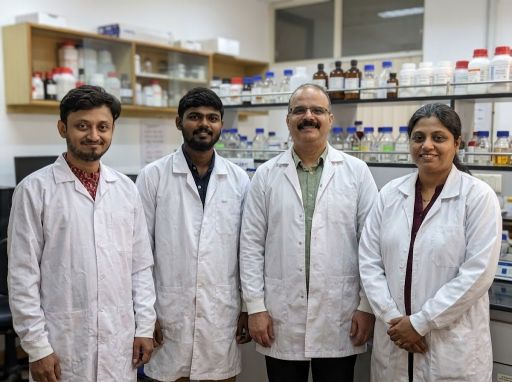
The study, led by Dr. Santosh Chauhan’s research group and published in The EMBO Journal, identifies a dual-action protein named DZIP3 that acts as an early warning sensor and an activator of the host immune system, the Centre said in a release on Thursday.
When a pathogenic virus penetrates a human cell, the host must identify the pathogen immediately to halt its replication.
Seven years ago, Dr. Chauhan’s group hypothesised the existence of specialised human proteins capable of performing two concurrent tasks: directly detecting viral genetic material and swiftly tagging key intracellular proteins to trigger the immune alarm.
The new study demonstrates that DZIP3 fulfills this exact role. Upon detecting viral RNA inside a cell, DZIP3 undergoes a conformational shape change that activates it.
Once active, the protein relocates to the cell’s mitochondria, where it tags and stimulates primary immune defence proteins.
This sequence unleashes a cascade of protective molecules known as Type-I interferons, which suppress viral replication.
The research team established that this biological pathway provides broad antiviral protection against multiple dangerous pathogens, including SARS-CoV-2, Chikungunya, and Japanese Encephalitis.
“Discovering how DZIP3 senses viral RNA and directly triggers the cell’s immune machinery gives us a deeper understanding of human immunity,” said Dr. Santosh Chauhan, Senior Principal Scientist at CSIR-CCMB and lead author of the study.
“Uncovering these natural cell defence mechanisms opens up exciting new possibilities, and targeting DZIP3 with small molecules could lead to broad-spectrum antiviral therapies against emerging viral threats,”
Dr Santosh added.
Dr. Rinku Sahu served as the first author of the investigation, working alongside collaborators from national and international research institutions. The study was funded by the Department of Biotechnology (DBT), Government of India.
Building on the findings, the research team is currently developing small-molecule drug candidates to activate and enhance DZIP3 function, with the aim of boosting the body’s innate antiviral immunity.
TNT TS