
Climate Change Increasing Risks for Elderly: HelpAge India Study Warns
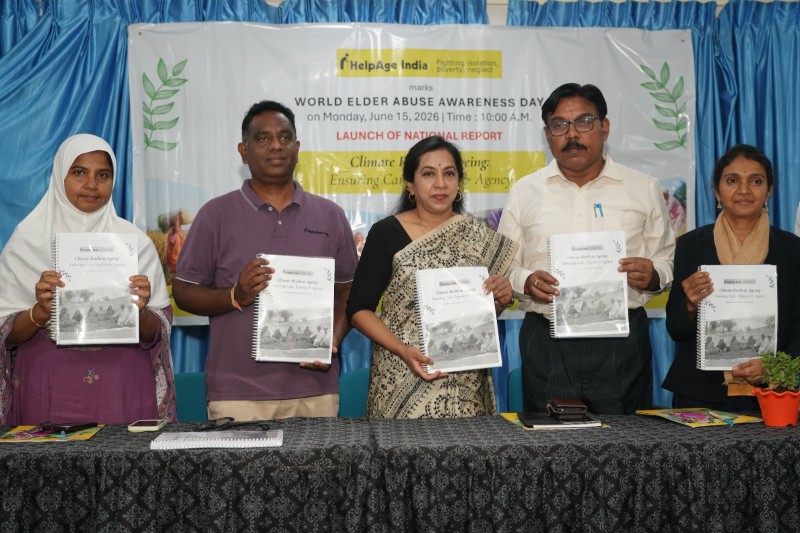
Hyderabad, June 15 (TNT): Climate change is emerging as a major threat to the health, livelihoods and overall well-being of India’s elderly population, particularly in rural areas, according to a first-of-its-kind national study released by HelpAge India on World Elder Abuse Awareness Day.
The report, titled “Climate Resilient Ageing – Ensuring Care, Dignity & Agency”, was launched at a programme held at Sundarayya Vignana Kendram here on Monday in the presence of Telangana State Commissioner for Welfare of Disabled and Senior Citizens B. Sailaja and other stakeholders.
The study, which surveyed 2,224 elderly persons across 20 districts in 10 states such as Andhra Pradesh, Bihar, Gujarat, Karnataka, Kerala, Madhya Pradesh, Maharashtra, Odisha, Tamil Nadu, and Uttarakhand, found that 78 per cent of respondents had experienced at least one climate-related hazard over the past three years. Heatwaves (45 per cent), floods (27 per cent) and droughts (20 per cent) emerged as the most commonly reported climate events.
The report noted that climate vulnerability among older persons is shaped not only by age but also by factors such as gender, disability, poverty, living arrangements and geographic location.
According to the findings, elderly persons living alone, widows, those aged above 80 years and individuals with cognitive, communication or mental health challenges face disproportionately higher risks during climate-related events.
The study highlighted that heat stress poses a significant challenge for senior citizens, particularly those living in kutcha or poorly ventilated houses, with 60 per cent reporting that their homes were not fully safe during extreme heat conditions.
Among those affected by heatwaves, 74 per cent reported increased illness, 44 per cent said existing health conditions worsened and 33 per cent experienced difficulty accessing healthcare services.
The report also revealed substantial healthcare vulnerabilities, with nearly half of the respondents living with long-term impairments, mainly related to mobility and vision.
More than half reported being unable to afford essential medicines.
Government health facilities, including Primary Health Centres and government hospitals, continue to remain the primary healthcare providers for the elderly, the study noted.
Family support remains the cornerstone of elderly care in India, with 73 per cent of respondents living with children or relatives and 94 per cent of those requiring assistance receiving support from family members.
However, migration is increasingly affecting traditional caregiving systems, with 18 per cent of households reporting that a family member had moved away for employment, reducing the availability of support for elderly relatives.
For those living alone, care arrangements were found to be particularly fragile, with many depending on neighbours or distant relatives, while some reported receiving no support at all.
The report also highlighted economic insecurity among senior citizens. Around 55 per cent of respondents did not own agricultural land, while pensions remained the primary source of income for nearly half of them. About 16 per cent reported having neither employment nor a regular source of income, with the proportion rising among those aged above 80 years.
The study recommended integrating ageing concerns into climate adaptation policies, disaster risk reduction strategies, climate financing frameworks and social welfare programmes to improve resilience among India’s growing elderly population.
Addressing the gathering, Sailaja said the Telangana Government was committed to strengthening welfare measures for senior citizens.
She highlighted the implementation of the Maintenance and Welfare of Parents and Senior Citizens Act in the state and said mechanisms had been established to address issues related to neglect and maintenance of elderly parents.
The Commissioner said eligible parents could seek maintenance support under the Act and that grievances were being addressed through Revenue Divisional Officers (RDOs) to ensure timely resolution.
She also outlined measures being taken to strengthen elder-care infrastructure, including the establishment of senior citizen homes and day-care centres across districts.
A panel discussion on climate-resilient ageing was also held during the event, where experts stressed the need for stronger community support systems, inclusive policies and enhanced social protection to safeguard older persons against the growing impacts of climate change.
The event was attended by representatives from senior citizen welfare organisations, academia and civil society, including Naga Chandrika Devi, Founder of Kinnera Welfare Society and member of the Telangana Senior Citizen Council; J. Nageswara Rao, Vice-President, Asara GHMC; Yentendra Yadav, State Head (Telangana and Andhra Pradesh), HelpAge India; Vijay Kumar, Associate Professor and Head, Centre for Equity and Social Development, NIRDPR; Hameeda Bee, Director, Centre for Women’s Studies, Osmania University; Prof. Asif Qureshi, Head, Department of Climate Change; and Padmaja Karanam, Senior Environmental Scientist at ICRISAT.
TNT TS