
Nikhil Kamath explores battery technologies for India’s next manufacturing wave
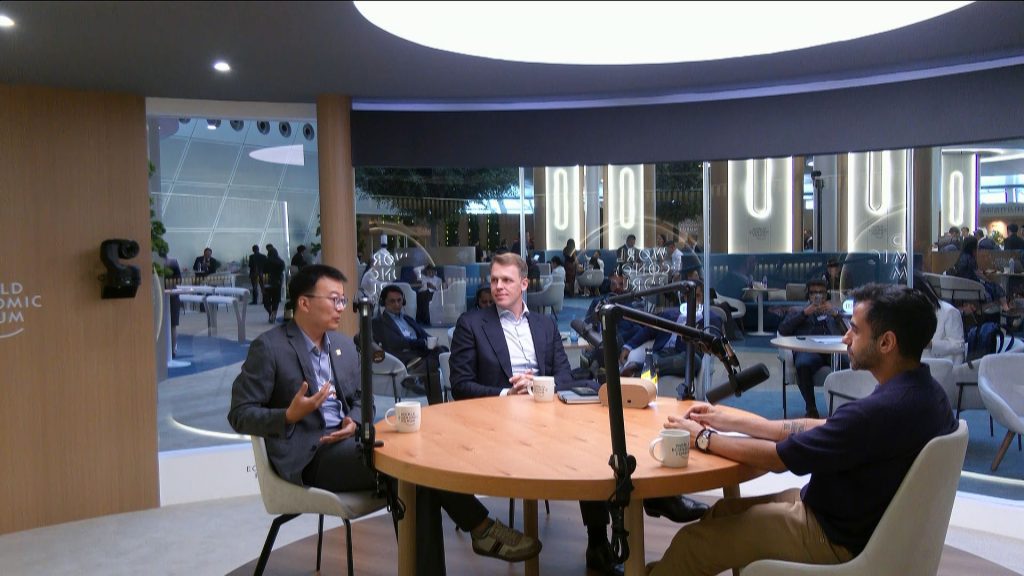
New Delhi, Aug 12 (TNT): India’s lithium-ion battery demand is expected to nearly quintuple to more than 115 GWh by 2030, while the country remains heavily dependent on imported battery cells and critical materials, according to the latest episode of People by WTF hosted by entrepreneur Nikhil Kamath.
The episode examines the safety, cost and manufacturing challenges facing battery technologies and explores whether India can build a battery industry with reduced dependence on China for lithium, rare earths and other critical materials.
Kamath was joined by Henning Rath, CEO of EnerVenue, and Kun Tang, Executive Chairman of HiNa Battery, for a discussion covering battery chemistry, manufacturing, industrial policy, artificial intelligence infrastructure and the economics of building a battery company in India.
The discussion highlighted concerns surrounding lithium-iron-phosphate (LFP) batteries, with Tang stating that more than 14,000 LFP battery fires were recorded globally in 2025.
The episode also discussed thermal runaway, a self-accelerating internal reaction that can occur when a battery reaches a critical temperature.
Tang advocated sodium-ion technology as an alternative to lithium-based batteries, saying sodium costs roughly one-tenth as much as lithium and can be sourced from materials such as sodium, iron and phosphate.
He said the technology’s lower energy density currently makes it more suitable for grid storage and short-range vehicles such as scooters and three-wheelers.
Rath presented another alternative through EnerVenue’s nickel-based, water-electrolyte battery technology, adapted from technology developed by NASA.
The technology is designed to reduce fire risks and is rated for up to 30,000 charge cycles, though it is currently intended for stationary storage rather than vehicles.
The speakers also expressed scepticism about the near-term commercial readiness of solid-state batteries.
Tang placed the technology at around level four on a nine-level industry readiness scale, saying it remained strong in research but was still some distance from commercial production.
The discussion examined India’s energy-security challenge as the country targets 500 GW of non-fossil power capacity.
Rath said the convergence of electrification, manufacturing and AI would increase demand for energy and argued that countries seeking to compete would need greater energy independence.
Kamath, who said he was considering entering the energy-transition sector after a visit to China, asked whether he should build an electric car or battery company.
Rath advised him to focus on batteries and suggested developing technology that is less dependent on lithium and rare earths, with India’s large scooter and three-wheeler market providing a potential initial customer base for sodium-ion technology.
The episode also discussed the rise of Chinese companies such as BYD and CATL and China’s approach to supporting emerging industries through what Rath described as a “government venture capital” model.
The speakers concluded that no single battery chemistry would meet all requirements and that different technologies would need to serve different applications based on safety, cost, energy density and performance.
TNT KS