India Crosses 300 GW Non-Fossil Power Capacity, Achieves Over 60% of 2030 Target
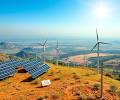
New Delhi, Aug 9 (TNT): India has crossed the 300 GW milestone in installed non-fossil fuel-based electricity generation capacity, reaching 300.50 GW as on July 31, 2026, placing the country more than 60 per cent of the way towards its 500 GW target by 2030, the government said.
Non-fossil sources now account for over 54 per cent of the country’s total installed electricity generation capacity of around 552 GW, marking a significant shift in India’s power generation mix.
Of the total non-fossil capacity, solar power accounts for 164.59 GW, followed by wind power at 58.14 GW, large and small hydro at 57.24 GW, bio-power at 11.75 GW and nuclear power at 8.78 GW.
Solar energy has emerged as the major driver of India’s clean energy expansion, with installed capacity rising from 2.8 GW in 2014 to 164.59 GW as of July 2026. Wind power capacity has increased from 21 GW to 58.14 GW during the same period.
India added a record 55.29 GW of non-fossil fuel-based generation capacity during 2025-26, including 44.6 GW of solar and 6 GW of wind capacity, according to the government.
The expansion in capacity has also been accompanied by a rise in renewable energy generation, which increased from 190.96 billion units in 2014-15 to 477.79 billion units in 2025-26.
Domestic manufacturing push
The government said the expansion of clean energy capacity was being supported by efforts to strengthen domestic manufacturing and reduce dependence on imported components.
The capacity enlisted under the Approved List of Models and Manufacturers (ALMM) for Solar PV Modules has crossed 200 GW, compared with 2.3 GW in 2014.
The growth in domestic solar manufacturing has been supported by measures including the Production Linked Incentive (PLI) scheme, aimed at promoting high-efficiency, domestically manufactured solar modules.
The government said the clean energy transition was increasingly contributing to energy security, industrial competitiveness and economic resilience, apart from supporting India’s climate commitments.
The Ministry of New and Renewable Energy is also implementing the National Green Hydrogen Mission, aimed at developing India as a global hub for the production, use and export of green hydrogen and its derivatives.
The government said the latest milestone strengthens India’s progress towards its 500 GW non-fossil capacity target by 2030 and the broader objective of building an energy-secure and self-reliant economy.
TNT TS