ICRISAT, CIMMYT Launch Climate-Resilient Crop Initiative for Dryland Farmers in Africa, India
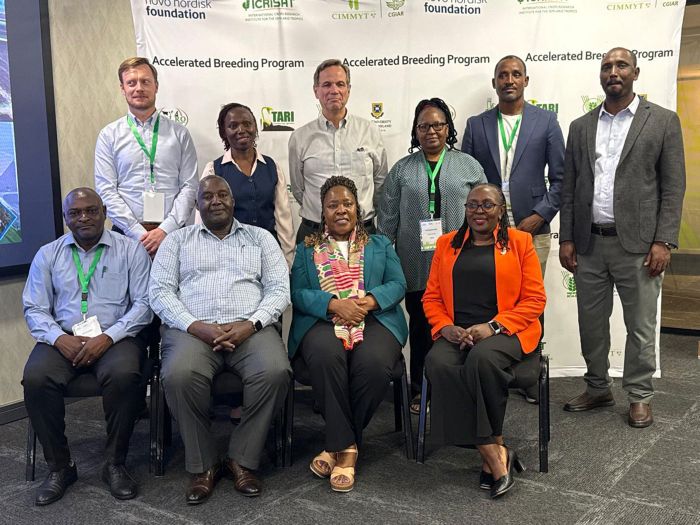
Nairobi (Kenya), May 14 (UNI): International Crops Research Institute for the Semi-Arid Tropics (ICRISAT) and CIMMYT have launched a major research initiative aimed at accelerating the development of climate-resilient and market-preferred crop varieties for dryland farmers in Africa and India.
The five-year initiative, supported by the Novo Nordisk Foundation, seeks to significantly reduce the time required to develop improved crop varieties using advanced breeding technologies and data-driven approaches, the Institute said in a release on Thursday.
The programme, titled “Applying Modern Tools to Enhance Precision and Speed of Dryland Crops Breeding”, will initially focus on sorghum and groundnut as proof-of-concept crops while establishing a scalable framework for dryland crop improvement across Africa and South Asia.
The partnership brings together CGIAR centres ICRISAT and CIMMYT along with national agricultural research systems in Kenya, Ethiopia, Tanzania and India, besides the University of Queensland.
Senior Scientific Lead at the Novo Nordisk Foundation, Dr de Bang, said the initiative demonstrates the value of sharing data, infrastructure, genetic resources and expertise across institutions to deliver meaningful solutions for farmers.
He said the convergence of advanced breeding science, modern data platforms and local expertise would help create greater impact in farmers’ fields.
The initiative comes amid growing concerns over climate change, which is intensifying droughts, heat stress, erratic rainfall and crop diseases across dryland regions, threatening food security and rural livelihoods.
The programme will use artificial intelligence-driven predictive breeding, genomic selection, speed breeding and advanced data integration technologies to modernise crop breeding systems.
Officials said the initiative aims to double genetic gain rates and reduce breeding cycle times by at least two years, enabling improved crop varieties to reach farmers faster.
Director-General of ICRISAT, Himanshu Pathak, said the initiative reflects the growing importance of scientific collaboration in responding to climate challenges and strengthening food systems.
“Through frontier science, AI and deep expertise in dryland agriculture, we are building a new generation of breeding systems capable of delivering faster, smarter and more climate-resilient solutions for farmers,” he said.
Director General of CIMMYT, Bram Govaerts, said no single institution could independently address the interconnected challenges of food security and climate change facing dryland regions.
He said the collaboration demonstrates how shared innovation and infrastructure can help accelerate impact for millions of smallholder farmers while building more resilient food systems.
Dryland agriculture currently supports more than two billion people globally but faces increasing challenges from climate change, degraded soils, unpredictable rainfall and inadequate investment in agricultural innovation.
The initiative also aims to position Africa and South Asia as global leaders in predictive breeding technologies for climate resilience.
Deputy Director General – Crops Research at the Kenya Agricultural Livestock Research Organisation, Alice Murage, said the programme would deepen collaboration among CGIAR centres, national institutions, universities, donors and farming communities.
She said the initiative would help co-develop technologies that are scientifically robust, locally relevant and responsive to farmers’ needs while contributing to resilient food systems and improved livelihoods across Africa.
TNT KS