BRICS declaration gives push to cooperation in traditional medicine: Prataprao Jadhav
New Delhi, Sept 13 (TNT): The New Delhi Declaration adopted at the 18th BRICS Summit has given a significant push to international cooperation in Traditional, Complementary and Integrative Medicine (TCIM), recognising its growing relevance to strengthening health systems and contributing to Universal Health Coverage (UHC), Union Minister of State (Independent Charge) for Ayush Prataprao Jadhav said.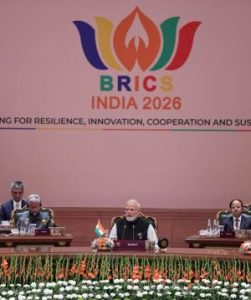
A key outcome of the declaration is the welcome accorded to the proposed establishment of a BRICS Expert Working Group on TCIM under the BRICS Health Track.
The proposed working group is envisaged as a platform for dialogue, collaboration and exchange among BRICS member states, providing a structured mechanism for advancing cooperation in traditional medicine.
“The recognition of Traditional, Complementary and Integrative Medicine in the New Delhi Declaration is an important step towards strengthening global cooperation in traditional medicine,” Mr Jadhav said.
He said the proposed BRICS Expert Working Group would provide a platform for member states to share knowledge, strengthen research and advance evidence-based approaches.
India remained committed to taking forward Ayurveda and other traditional systems of medicine through scientific research, quality assurance and international collaboration so that their potential could contribute to safe, effective and affordable healthcare, he added.
The declaration calls for greater cooperation in research on medicinal plants and herbal preparations used for therapeutic and preventive purposes. It also recognises that the shared traditional pharmacopoeias of BRICS member countries could provide a foundation for developing safe, effective and affordable therapeutic products.
The emphasis on coordinated research assumes significance for BRICS countries, where traditional systems of medicine have evolved over generations and medicinal plants and herbal preparations form an important component of healthcare traditions.
The declaration further reaffirms the importance of ensuring the quality, safety and efficacy of TCIM practices and products through evidence-informed approaches and appropriate regulatory frameworks in accordance with the national contexts of member states.
Secretary, Ministry of Ayush Vaidya Rajesh Kotecha said the declaration marked an important step towards advancing structured cooperation on TCIM among BRICS countries.
He said the proposed Expert Working Group could provide a focused platform for sharing evidence, strengthening research collaboration and improving quality and regulatory approaches.
The development follows the BRICS Meeting on Traditional, Complementary and Integrative Medicine held in Chandigarh on July 21 under India’s BRICS Chairship.
The meeting brought together senior government officials, technical experts and delegates from BRICS member states and advanced cooperation in research, education, knowledge exchange and regulatory frameworks related to TCIM.
The meeting also resulted in consensus on the Terms of Reference for the proposed BRICS Expert Working Group on TCIM.
The proposed working group is expected to further institutionalise cooperation and facilitate sustained engagement among research institutions, experts, policymakers and academic institutions across BRICS countries.
For India, the development reinforces efforts to advance Ayurveda and other Ayush systems through research, evidence generation, quality assurance and international cooperation.
The focus on medicinal plants and herbal preparations also opens avenues for deeper scientific and technical collaboration among BRICS countries, including research, documentation, pharmacopoeial knowledge and development of quality-assured therapeutic products.
The declaration’s focus on TCIM, therefore, represents not merely recognition of traditional medicine but also a call for deeper, evidence-informed international cooperation, with the proposed working group providing avenues for research, evidence generation, capacity building, knowledge exchange and regulatory cooperation.
TNT KM