Telangana Dy CM Bhatti urges Centre to protect states’ revenue interests in GST reforms
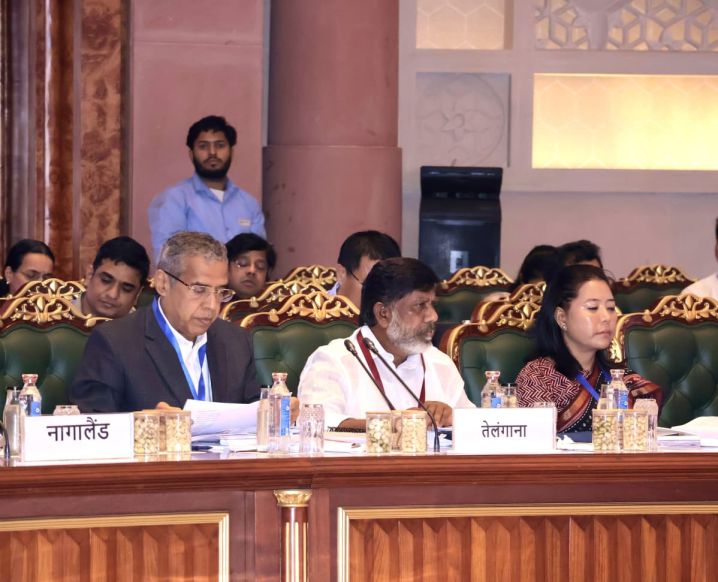
New Delhi, Oct 8 (TNT): Telangana Deputy Chief Minister and Finance Minister Bhatti Vikramarka Mallu on Thursday urged the Centre to protect the revenue interests of states while undertaking GST reforms and called for simpler compliance for honest taxpayers along with zero tolerance towards deliberate tax evasion.
Addressing the 57th GST Council meeting, Bhatti said mutual trust between the Centre and states was the foundation of the GST system and major changes should be brought through consultation and consensus.
He said states had surrendered a significant part of their taxation powers with the expectation that a unified national market would strengthen the country’s economy.
The GST system should therefore function as a partnership between the Centre and states while safeguarding state revenues, he said.
Bhatti said GST accounted for around 35 per cent of Telangana’s own tax revenue, which supported schools, hospitals, welfare programmes and infrastructure development.
He urged the Centre to share the full financial impact with states before implementing changes relating to refunds on motor vehicles, capital goods and input services.
According to estimates provided by the Centre, Telangana could face an annual revenue impact of around Rs 800 crore in the case of motor vehicles, while the state’s own assessment indicated that the actual loss could be more than double that amount.
The Deputy Chief Minister supported automatic GST registration in appropriate cases and automatic processing of applications for registration amendments and cancellation.
He also favoured automatic sanction of refunds in low-risk cases to enable genuine taxpayers to receive refunds quickly while allowing tax authorities to focus on high-risk cases.
He welcomed measures to rationalise penalties and reduce random stoppage of goods vehicles on roads.
He also suggested changes in GST returns to minimise discrepancies and prevent unnecessary notices to genuine taxpayers.
Bhatti called for stringent action against fake registrations, GST fraud and misuse of identity details.
He said Aadhaar and PAN details of elderly persons, homemakers, daily-wage workers and other innocent people were being misused to create fraudulent GST registrations.
He sought strict action against individuals and organised gangs involved in generating fake invoices and fraudulently obtaining or transferring input tax credit, stressing that enforcement against organised tax evasion should not be weakened in the name of simplifying procedures.
Highlighting tax evasion in the scrap sector, Bhatti said its unorganised and cash-based nature was facilitating generation of fake invoices and fraudulent transfer of input tax credit.
At the same time, he stressed that measures should not affect the livelihoods of waste collectors and small-scale scrap collectors.
Telangana proposed constituting a Group of Ministers under the GST Council to examine issues relating to the scrap sector and identity theft and formulate an action plan protecting the interests of vulnerable sections.
Bhatti also sought adequate representation for Telangana in various committees of officials being reconstituted by the GST Council and in the Standing Committee of Officers.
Regional GST offices sought in Hyderabad
Bhatti urged the Centre to establish regional offices of GSTN and the GST Council Secretariat in Hyderabad, citing the city’s strengths in technology, data analytics and artificial intelligence.
He said such offices would bring GST administration closer to the states and strengthen technology-driven systems for detecting tax evasion and fraud.
Telangana also suggested that both the originating and destination states should retain their existing powers to inspect goods vehicles, while adopting a balanced approach to prevent tax evasion without causing difficulties to legitimate businesses.
Bhatti urged the Centre to recognise the contribution of export-oriented states such as Telangana and provide adequate support and incentives to states investing in infrastructure and public-interest initiatives to develop a competitive export ecosystem.
He also sought a specific and transparent share for states from the Health Security and National Security Cesses to strengthen public health infrastructure.
Bhatti said the revenue generated through GST ultimately belonged neither to the Centre nor to the states but to the people of India.
“Making compliance easier for honest taxpayers and maintaining zero tolerance towards deliberate tax fraud must go hand in hand,” he said, urging that the GST system be made more transparent and efficient.
TNT M