States commit to 15-fold expansion in energy storage, universal electrification by March 2027
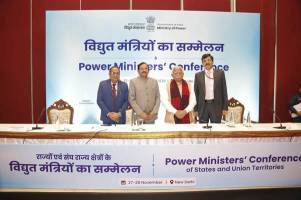
New Delhi, Nov 29 (TNT): States and Union Territories have committed to a 15-fold expansion in energy storage capacity and completing the remaining household electrification work by March 2027, as the two-day Power Ministers’ Conference concluded here on Saturday.
The conference, chaired by Union Power and Housing and Urban Affairs Minister Manohar Lal, also emphasised strengthening transmission infrastructure, improving the financial viability of power distribution companies (DISCOMs) and accelerating renewable energy deployment to achieve energy independence and the goal of Viksit Bharat@2047.
The conference highlighted India’s installed power generation capacity of 563 GW, with more than 55 per cent coming from non-fossil fuel sources.
The country aims to increase the capacity to 1,297 GW by 2035-36. India added 60 GW of capacity in the preceding year, of which 87 per cent was from non-fossil sources.
States agreed to review and submit their Resource Adequacy Plans up to 2029-30 within a month, incorporating realistic demand projections and verified transmission connectivity. Progress will be monitored quarterly.
They were also advised to accelerate battery and pumped storage projects and adopt renewable energy combined with storage to ensure reliable round-the-clock power supply.
On power distribution reforms, States agreed to clear pending government electricity dues within a quarter and shift all government electricity connections to prepaid smart meters.
Utilities were also asked to address billing-related complaints through check meters, improve consumer mobile applications and strengthen grievance redressal mechanisms.
The conference stressed the need to strengthen intra-State transmission networks, adopt tariff-based competitive bidding and implement revised technical standards to ensure that transmission infrastructure keeps pace with generation capacity.
States also committed to accelerating agricultural feeder segregation and solarisation to reduce power purchase costs and subsidy burdens.
On nuclear energy, States agreed to expedite land and water availability and identify suitable sites, including retired thermal power plant locations, to support the country’s target of achieving 100 GW of nuclear power capacity by 2047.
Addressing the media after the conference, Manohar Lal said 14.5 lakh households had been taken up for electrification, of which around 6.25 lakh had been completed, including through off-grid arrangements. The remaining households are expected to be electrified by March 2027, except for some in remote and hilly areas.
A joint session with the Central and State Electricity Regulatory Commissions emphasised timely regulatory decisions, cost-reflective tariffs and improved financial sustainability of DISCOMs. It also called for a consultative approach before issuing tariff orders to minimise disputes and litigation.
The conference also highlighted an estimated investment opportunity of Rs 200 lakh crore in the power sector over the next two decades.
Union Minister of State for Power and New and Renewable Energy Shripad Naik, State and UT Power Ministers, Power Secretary Pankaj Agarwal, Central Electricity Authority Chairperson, Central Electricity Regulatory Commission Chairman and senior Central and State officials attended the conference.
TNT KS