
Scientists Develop NIR-Driven Nanobot for Targeted Breast Cancer Therapy
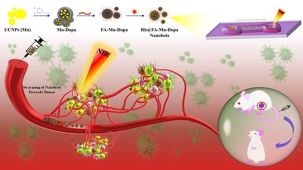
New Delhi, Aug. 5 (TNT): Scientists have developed an advanced near-infrared (NIR) light-driven multifunctional nanobot capable of actively targeting and destroying breast cancer cells, offering a promising platform for precision cancer therapy with minimal damage to healthy tissues.
The research was carried out by scientists from the Institute of Nano Science and Technology (INST), Mohali (Punjab), an autonomous institute under the Department of Science and Technology (DST), in collaboration with the Bhabha Atomic Research Centre (BARC), Mumbai.
The team, led by Dr. Jiban Jyoti Panda of INST and Dr. Santosh K. Gupta of BARC, developed upconversion nanoparticle (UCNP)-based nanobots that convert NIR light into heat and exhibit directional movement under laser irradiation.
The researchers said conventional chemotherapy often causes severe side effects because of non-specific drug distribution and poor tumour penetration, while existing nanomedicines largely rely on passive accumulation at tumour sites.
The newly developed nanobots overcome these limitations by actively moving towards the tumour under external light guidance.
The nanobots were functionalised with a photosensitiser to generate reactive oxygen species (ROS) under NIR irradiation and coated with folic acid, enabling selective recognition of breast cancer cells that overexpress folate receptors.
Upon exposure to a 980 nm NIR laser, the nanobots generate localised heat and actively move towards the laser source through phototaxis.
The combined effects of photothermal heating and ROS generation destroy cancer cells, resulting in greater tumour inhibition than individual treatment methods.
The researchers demonstrated the therapeutic efficacy of the nanobots in both cell-based studies and breast tumour-bearing mice.
The findings, published in the journal ACS Applied Materials & Interfaces, describe a fuel-free, NIR-responsive nanobot platform capable of externally controlled movement and targeted cancer therapy through folic acid-mediated tumour recognition.
According to the researchers, the technology offers a minimally invasive approach to breast cancer treatment by combining active navigation, targeted drug delivery and phototherapy in a single platform, with therapeutic action regulated by laser intensity, pH and glutathione concentration in biological systems.
TNT KS