NSE IPO draws strong investor response: NSE CBDO says issue priced at reasonable level
Hyderabad, Sept 18 (TNT): The National Stock Exchange (NSE) on Friday said its initial public offering (IPO) was receiving a strong response from investors, with the issue expected to be fully subscribed by the end of the second day.
The IPO, which opened for subscription on September 17, was subscribed 0.43 times on the first day, with bids received for 3,82,36,600 equity shares against 8,86,42,911 shares on offer. The offer closes on September 21.
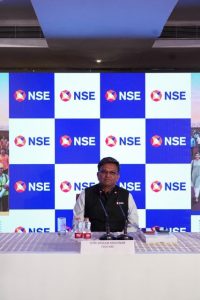
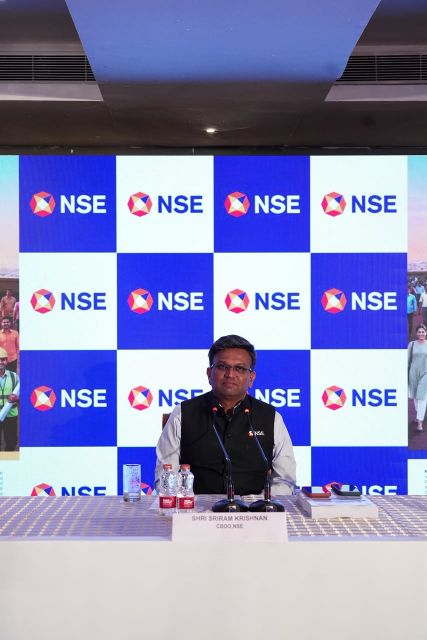
Addressing a press conference on the occasion of the forthcoming initial public offering, NSE Chief Business Development Officer (CBDO) Sriram Krishnan said the exchange had priced the IPO in the range of Rs 1,700-1,785 per share after feedback from IPO bankers and investors. The initial price range had been fixed at Rs 2,000-2,100 per share.
He said the anchor book attracted 189 investors, with Rs 6,746 crore allocated to anchor investors. The retail portion was 60 per cent subscribed, while the employee category was fully subscribed.
The HNI (High Net-worth Individual) category was subscribed 1.14 times and the QIB (Qualified Institutional Buyer): segment 1.2 times, he said.
The NSE had initially planned an IPO size of Rs 31,500 crore. However, some selling shareholders withdrew after the price range was reduced, making it necessary to balance the expectations of selling shareholders and investors, the CBDO said.
He described Rs 1,785 as a reasonable price for the issue and said the IPO had performed well despite global uncertainties, including developments in the Middle East and concerns surrounding artificial intelligence-related developments.
He said NSE’s growth had been driven by its technology, scale and a series of innovations introduced since its establishment.
NSE was the first exchange in the world to offer online screen-based trading, besides introducing real-time risk management and guaranteed settlements, he said.
Unlike the membership structure prevalent at the Bombay Stock Exchange at the time, NSE opened membership to those seeking to become brokers, he said.
The exchange currently offers a range of products, including equities, equity derivatives, fixed income, currency, interest-rate futures and options and commodities, he said NSE’s technology platform was capable of handling more than 2,200 crore automated messages a day within six hours and 15 minutes, while its systems could process, clear and settle more than 30 crore trades a day.
He also highlighted NSE’s role in setting up the National Securities Depository Limited (NSDL), India’s first depository, which he said helped dematerialise 95 per cent of physical share certificates within two years of its establishment.
On derivatives, he said the business was sustainable and that derivatives were “here to stay”, while acknowledging regulatory concerns over retail investors suffering losses in options trading.
He said regulators could potentially prescribe investor eligibility criteria for options trading to protect retail investors.
On changes relating to the closing auction session (CAS), he said the mechanism had been introduced by SEBI following requests from passive fund managers seeking a way to execute trades at closing prices.
He said concerns over volatility in settlement prices for expiring index options were linked to activity on an illiquid exchange rather than NSE.
He said SEBI’s proposed gradual glide path would continue the existing method for a period before moving to a new methodology based on volume-weighted average prices (VWAP) from regular trading and the closing auction session.
He said the closing auction session had not affected trading volumes and argued that it had helped increase volumes in other markets.
TNT TS