
Indian astronomers discover rare ancient star preserving clues to early Universe
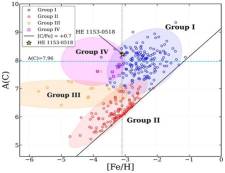
The discovery is expected to provide important insights into the nucleosynthesis processes that enriched the primordial Universe and the chemical evolution of the Milky Way galaxy, the institute said in a release on Monday.
The research team used high-resolution spectroscopic data collected through the Subaru Telescope in Hawaii, along with recent astrometric and photometric observations, to determine the atmospheric properties and chemical composition of the star.
The study identified HE 1153−0518 as a rare sub-class of carbon-enhanced metal-poor stars known as CEMP-no stars, which are characterised by high carbon abundance and a deficiency of heavy elements.
The star contains only about one-thousandth of the Sun’s iron abundance but is unusually rich in carbon and sodium, while having very low levels of heavy elements produced through neutron-capture processes.
Researchers also found a low carbon isotopic ratio, indicating significant internal mixing within the star.
Observations in optical and infrared wavelengths further revealed excess infrared emission, suggesting the possible presence of circumstellar dust.
Aruna Goswami of IIA, a co-author of the study, said ancient metal-poor stars were among the oldest surviving objects in the galaxy and their chemical composition helped scientists investigate nucleosynthesis processes that occurred more than 13 billion years ago.
Partha Pratim Goswami of Dakshin Kamrup College, lead author of the study, said every newly discovered chemically primitive star helped reconstruct the early history of the Milky Way and understand the evolution of the first generations of stars.
The findings have been published in the Monthly Notices of the Royal Astronomical Society (MNRAS).
The Indian Institute of Astrophysics is an autonomous institution under the Department of Science and Technology, Government of India.
TNT KM