
Hyderabad Hosts Second BRICS Anti-Corruption Working Group Meeting
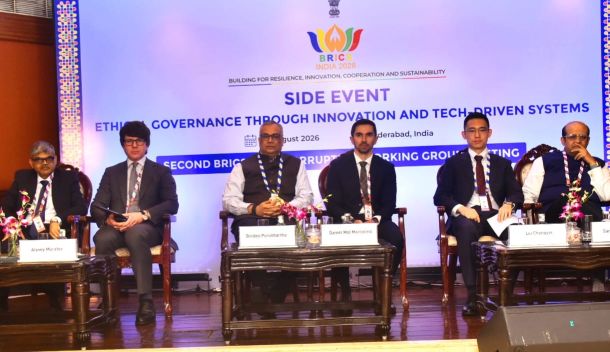
Hyderabad, Aug. 5 (TNT): The Second BRICS Anti-Corruption Working Group (ACWG) Meeting and the Second Meeting of the BRICS Expert Network on Asset Recovery concluded in Hyderabad on Wednesday, with member countries reaffirming their commitment to strengthening international cooperation in combating corruption, asset recovery and financial crimes.
The two-day meetings, held on August 4 and 5 under India’s BRICS Presidency, were organised by the Department of Personnel and Training (DoPT) and attended by senior policymakers, anti-corruption experts, financial intelligence officials and law enforcement representatives from all BRICS member countries.
Inaugurating the meetings, DoPT Secretary Rachna Shah reiterated India’s zero-tolerance policy towards corruption and stressed that ethics, integrity, transparency, accountability and technology-driven governance are essential for good governance and sustainable development.
She also emphasised the need for timely information sharing, institutional coordination and stronger international cooperation.
India proposed the creation of a BRICS network of law enforcement experts to strengthen cooperation in tracing and extraditing fugitive offenders.
The proposal received broad support from member countries, which agreed in principle to continue discussions on establishing a dedicated operational platform.
The member nations also welcomed the establishment of a BRICS information repository to facilitate informal cooperation in identifying fugitives and supporting extradition efforts by providing information on enforcement mechanisms and available cooperation channels.
The BRICS Expert Network on Asset Recovery achieved progress in developing practical mechanisms to strengthen direct cooperation among competent authorities.
Member countries agreed on standardised procedures for timely information exchange during investigations and endorsed the creation of an expert directory to improve coordination among enforcement agencies.
The meetings also discussed the use of Artificial Intelligence, Machine Learning and Big Data Analytics to enhance transparency, preventive vigilance and ethical governance, while highlighting the role of open data, digital social audits and grievance redressal platforms in strengthening public accountability.
Delegates further examined emerging risks associated with financial technology (FinTech) and virtual digital assets, stressing the need for stronger anti-money laundering safeguards, risk-based regulatory frameworks and enhanced cross-border cooperation among financial intelligence units.
The meetings reaffirmed the collective commitment of BRICS countries to deepen practical cooperation in combating cross-border corruption, recovering illicit assets, tracing fugitive offenders and promoting transparent, accountable and technology-driven governance.
The outcomes are expected to serve as a foundation for future BRICS presidencies to advance anti-corruption cooperation among member nations.
TNT TS