HSL Chief Calls for Shift to Series Production to Boost Indian Shipbuilding
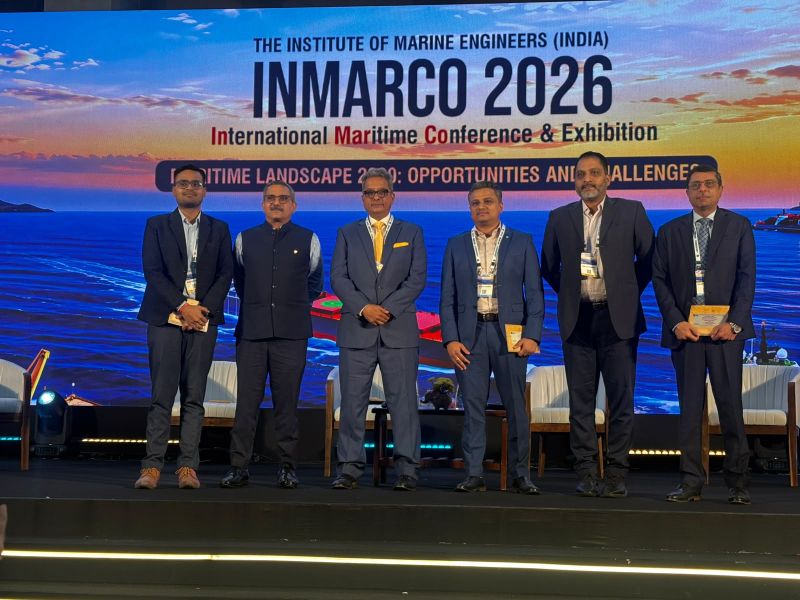
Addressing a panel discussion on “Shipyards and Newbuilds: Maritime Landscape 2030” at INMARCO 2026, organised by the Institute of Marine Engineers (India) in Mumbai, he said India had demonstrated its ability to build ships but needed to establish a system for producing them repeatedly, on schedule and at competitive costs.
He said the industry should move beyond treating the first ship as a standalone achievement and focus on repeat production, pointing to an estimated 24 per cent cost gap between Indian and East Asian shipyards.
While incentives could help narrow the gap, series production was essential to closing it, he said.
Highlighting HSL’s recent milestones at Visakhapatnam, he said the shipyard launched Surya, the first of five Fleet Support Ships for the Indian Navy, on October 6. The 43,500-tonne vessel is targeted to have more than 80 per cent indigenous content and has been classified by the Indian Register of Shipping.
On the same day, HSL laid the keel of the fifth ship in the series and inaugurated an extended Slipway-4 equipped with a 300-tonne Goliath crane designed to handle ships of up to 45,000 deadweight tonnes.
In August, the Visakhapatnam-based shipyard delivered INS Nipun, the second indigenous Diving Support Vessel.
Raghuram proposed greater collaboration between ports, shipyards, classification societies, the Directorate and battery manufacturers to develop standards for emerging vessel categories, beginning with green tugs.
He said Indian industry should have a stronger role in shaping the rules under which new ships are designed, approved and built.
He also called for a digital record, described as a “digital birth certificate”, to accompany every ship built in India.
The record would include the inventory of hazardous materials required under the Hong Kong Convention and serve surveyors, shipowners, repair yards and recyclers throughout a vessel’s lifecycle, potentially spanning 30 years.
The HSL chief said Indian shipyards should focus on three priorities set by the Defence Minister during a visit to the shipyard on October 6: indigenous design, timely delivery and measurable productivity.
Welcoming government support for the sector, he cited a projected demand for around 437 vessels over the next decade, infrastructure status for Indian-built ships, a ₹69,725-crore package, a ₹25,000-crore Maritime Development Fund and a target of 4.5 million gross tonnes of annual shipbuilding capacity.
He called for clearer delivery schedules to be shared with shipyards, greater participation by Indian designers in standards-setting, and long-term financing and local service support from equipment manufacturers and financial institutions.
Raghuram also proposed that the India Ship Technology Centre help micro, small and medium enterprises, design firms and shipyards develop a common digital record system, adding that HSL was ready to participate.
Noting that each shipbuilding job could generate around six additional jobs, he said the proposed package had the potential to create close to 30 lakh jobs.
The panel was moderated by Ankur Anal, Junior Ship Surveyor-cum-Additional Director General (Technical), Directorate General of Maritime Administration. Other participants included Capt P Sunil Kumar of GRSE, Sujith Tooneri of Lloyd’s Register, Rajeev Nayyer of Swan Defence and Heavy Industries, and Cdr Samuel Ranji of First Marine International, Royal HaskoningDHV.