
IIT Patna develops hybrid magneto-rheometer to improve testing of smart fluids
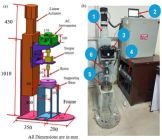
New Delhi, Aug 3 (TNT): Researchers at the Indian Institute of Technology (IIT) Patna have developed an innovative hybrid magneto-rheometer capable of accurately characterising the behaviour of magneto-rheological (MR) fluids under combined compression and shear conditions, paving the way for improved applications in healthcare, aerospace, defence and industrial automation.
MR fluids are smart materials whose viscosity increases rapidly when exposed to a magnetic field, enabling them to change from a liquid to a viscoelastic solid.
This property makes them suitable for applications such as brakes, clutches, shock absorbers, vibration control systems, dampers, actuators and medical devices.
The researchers noted that understanding the behaviour of MR fluids under simultaneous compression and shear—one of the least studied operating modes—has remained a challenge, limiting their wider industrial application.
To address this, a team led by Prof. Chiranjit Sarkar at IIT Patna, with support from the Department of Science and Technology (DST) under its Nano and Advanced Materials programme, developed a custom-designed hybrid magneto-rheometer and prepared nano iron powder-based MR fluids for testing.
The newly developed instrument measures both the rheological (flow and deformation) and tribological (friction and wear) properties of MR fluids under compression and shear, both in the presence and absence of a magnetic field.
According to the researchers, the rheometer generates a uniform high-intensity magnetic field across the sample region at relatively low current, enabling comprehensive evaluation of MR fluid performance under realistic operating conditions.
The team said the prototype provides a more detailed understanding of MR fluid behaviour than conventional testing methods and could support the development of high-performance smart materials for adaptive and energy-efficient technologies.
Besides MR fluids, the hybrid rheometer could also help study the viscoelastic properties of materials used in sectors such as polymers, pharmaceuticals, food processing, cosmetics and petrochemicals.
The research findings have been published in the journal Rheologica Acta.
TNT KM