
AI to Create More Jobs than it Displaces, Say Experts at GITAM Conclave
Hyderabad, Mar13 (TNT): Industry experts on Friday said that artificial intelligence (AI) is expected to create more jobs than it displaces globally, even as automation reshapes employment patterns across sectors.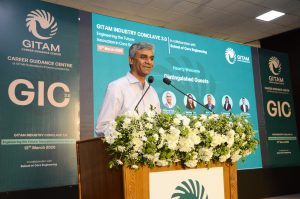
Speaking at Industry Conclave 3.0 organised by the Career Guidance Centre at GITAM Deemed to be University, here, the experts noted that while AI could displace about 85 million jobs worldwide by 2030, it is also projected to create nearly 97 million new roles across emerging and technology-driven sectors.
The conclave, held on the theme “Engineering the Future: Innovation in Core Sectors,” brought together industry leaders and academicians for discussions on the evolving landscape of engineering careers and industry requirements.
Experts said that although the job market will continue to grow, students must acquire industry-relevant skills to remain competitive in an AI-driven economy. They advised aspiring engineers to gain practical exposure through internships, industry visits and hands-on learning, while continuously updating their knowledge.
The speakers also emphasised the importance of adaptability and a proactive learning mindset, noting that artificial intelligence has already become an integral part of modern professional life. According to them, attitude and adaptability account for nearly 75% of success in recruitment, beyond technical expertise.
Delivering his keynote address at the inaugural session, Preet Yadav, Head of India Innovation Ecosystem at NXP Semiconductors, and Suman Gorla, Delivery Lead at Stellantis, highlighted the importance of innovation and strong industry–academia collaboration in shaping the future of core engineering sectors.
The conclave featured three panel discussions covering emerging trends in engineering industries.
The first panel, “Driving the Industrial Future: Energy, Mobility, Manufacturing,” discussed developments in energy and manufacturing sectors and included industry representatives from companies such as Axis Energy, Praj Industries, Armoured Vehicles Nigam Limited and UltraTech Cement.
The second panel, “The Strategic Shift: From Horsepower to Compute Power,” examined the growing influence of AI, semiconductor technologies and digital engineering, with participants from organisations including Bosch and GlobalFoundries.
A third discussion on “Building Competencies Beyond Technical Skills: Opportunities in Core Engineering” focused on employability skills and recruitment trends in the engineering sector.
During their visit, the panelists also toured laboratories and facilities at the GITAM School of Core Engineering, appreciating the university’s efforts to build advanced infrastructure for research and technical education.
Earlier, Pro Vice-Chancellor Prof. D. S. Rao delivered the welcome address, while Prof. Ramesh Vaddi, Director of the School of Core Engineering, expressed confidence in the success of the event..
The conclave witnessed enthusiastic participation from faculty members and students of the School of Core Engineering.
TNT TS