CSIR, Nalanda University sign MoU to promote sustainable development, scientific outreach
New Delhi, July 22 (TNT): The Council of Scientific and Industrial Research (CSIR) and Nalanda University (NU) on Wednesday signed a Memorandum of Understanding (MoU) to jointly promote technology deployment, sustainability, rural development, skill enhancement and scientific outreach.
The partnership aims to leverage CSIR’s indigenous technologies and Nalanda University’s international academic ecosystem to develop scalable models of community-centric development while enhancing the global visibility of Indian scientific innovations.
The MoU was exchanged in the presence of CSIR Director General and DSIR Secretary Dr N. Kalaiselvi, Nalanda University Vice-Chancellor Prof Sachin Chaturvedi, Secretary (East), Ministry of External Affairs, Rudrendra Tandon, along with senior officials, scientists and faculty members from both institutions.
Speaking on the occasion, Prof Chaturvedi said the collaboration would strengthen sustainable development initiatives in and around the Nalanda region through the deployment of technologies in areas such as model village development, solid waste management, water quality improvement and environmental sustainability, while deepening the university’s engagement with local communities.
Rudrendra Tandon said Prime Minister Narendra Modi envisioned Nalanda University as a world-class international institution with a strong global network of academic and research partnerships.
He said the collaboration with CSIR, India’s premier scientific research organisation, would significantly contribute towards achieving that vision and benefit students, researchers and neighbouring communities.
Addressing the gathering, Dr Kalaiselvi described the agreement as a milestone for both institutions and said Nalanda University’s international student community offered a unique platform to showcase India’s scientific capabilities and expand the global outreach of CSIR technologies.
She stressed the importance of interdisciplinary approaches and highlighted CSIR’s mission-mode technologies in areas such as solid waste management, soil reclamation, water quality improvement and other societal initiatives, proposing that at least three focused societal missions be implemented during the initial phase of the collaboration.
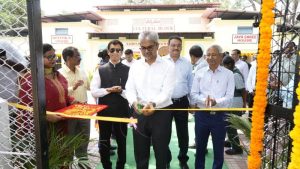
The MoU also envisages the establishment of a CSIR Technology Gallery at the Nalanda University campus to showcase indigenous technologies developed by CSIR laboratories for students, researchers and international visitors.
TNT KS