
Short spells of extreme heat during pregnancy raise risk of adverse birth outcomes: Study
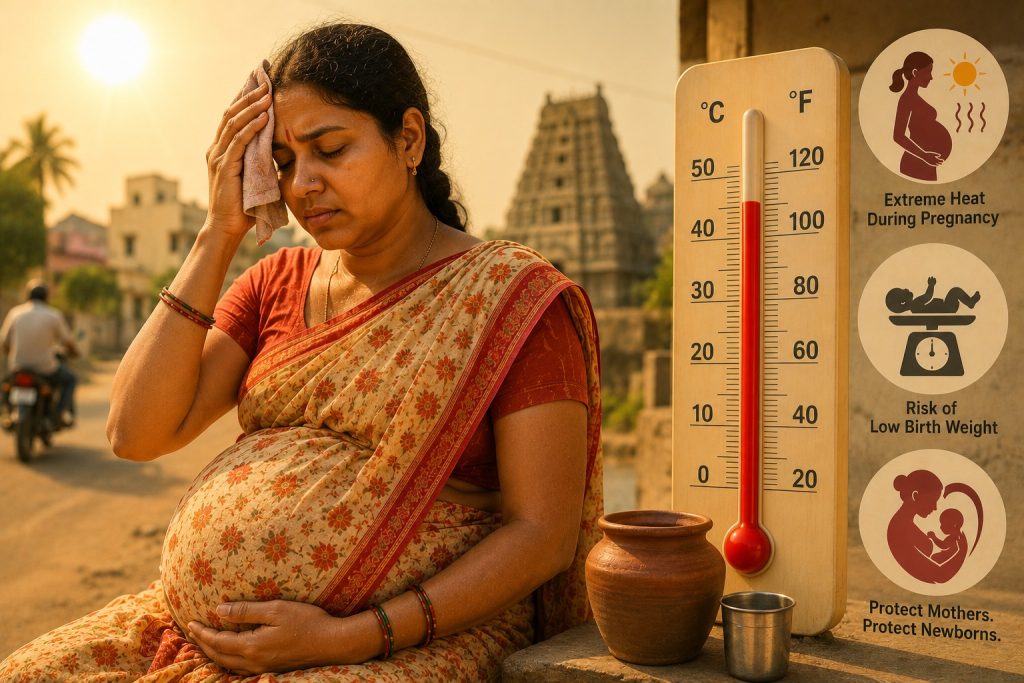
Hyderabad, July 22 (TNT): Even three to four consecutive days of extreme heat during pregnancy can increase the risk of low birth weight among newborns, according to a nationwide study that has underscored the need to prioritise pregnant women in India’s heat action plans.
The study, titled “Effect of Extreme Heat Stress on Adverse Pregnancy Outcomes in India”, found that prolonged exposure to extreme heat during pregnancy was associated with an increased risk of preterm birth and low birth weight.
Conducted by researchers from the University of Queensland-IIT Delhi Academy of Research (UQIDAR), IIT Delhi and the University of Queensland’s School of Public Health, in collaboration with the University of New South Wales, the University of Exeter and Korea University, the study has been published in the peer-reviewed journal Environmental Research Communications.
The findings assume significance for Andhra Pradesh and Telangana, where repeated bouts of intense summer heat affect both coastal and inland regions.
The researchers analysed 2,09,266 births recorded between 2015 and 2020 and matched each case with local heat conditions experienced during pregnancy.
Heat exposure was measured by the number of consecutive “sweltering” days, defined as days when the India Heat Index exceeded the 90th percentile of the long-term local climate.
The study found that each additional consecutive sweltering day during pregnancy increased the odds of low birth weight by about one per cent after adjusting for other factors.
Heat exposure during the first trimester was associated with a higher risk of preterm birth, while exposure during the second trimester was linked to low birth weight.
Lead author Vineetha Vincent of UQIDAR said that although the increase in risk for each additional hot day was modest, the cumulative effect over the course of pregnancy made it a significant public health concern as extreme heat events became more frequent.
The study also found that mothers with no formal education or only primary education were more likely to have low-birth-weight babies or experience stillbirths with increasing heat exposure than better-educated mothers.
Co-author and IIT Delhi Professor Sagnik Dey said women most exposed to extreme heat were often those with the fewest resources to cope with it, including the poor, undernourished and less educated, stressing that adaptation measures must prioritise these vulnerable groups.
The researchers recommended that heat action plans across the country explicitly identify pregnant women as a priority group and incorporate targeted measures to protect maternal and newborn health during periods of extreme heat.
TNT KM