Centre to introduce three delimitation bills in Lok Sabha on Monday
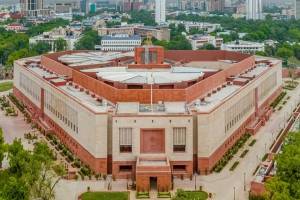
New Delhi, Nov 29 (TNT) : The BJP-led NDA government is set to introduce a fresh legislative package on delimitation in the Lok Sabha on Monday during a special sitting of Parliament, seeking to increase the strength of the Lower House by 50 per cent and facilitate implementation of 33 per cent reservation for women in legislatures before the 2029 general elections.
According to the proposed legislative agenda, the government plans to introduce three bills — the Constitution (One Hundred and Thirty-Second Amendment) Bill, 2026, the Delimitation (Second) Bill, 2026 and the Union Territories Laws (Amendment) Second Bill, 2026.
The proposed package envisages increasing the number of Lok Sabha seats from the existing 543 by 50 per cent, subject to an overall ceiling of 850 seats.
It also proposes increasing the maximum strength of State Legislative Assemblies to 650.
To address concerns among southern States over a possible loss of their relative representation, the proposed legislation seeks to freeze inter-State seat proportions until 2051.
The bills also aim to facilitate one-third reservation for women, including women belonging to Scheduled Castes and Scheduled Tribes, in the Lok Sabha, State Legislative Assemblies and Union Territory legislatures following delimitation.
The Lok Sabha is scheduled to reconvene on November 30, while the Rajya Sabha will meet on December 2.
The special sittings are scheduled to continue until December 3.
The fresh legislative initiative follows an earlier attempt in April 2026, when the Constitution (One Hundred and Thirty-First Amendment) Bill failed to secure the required two-thirds majority in the Lok Sabha.
According to reports, the ruling NDA has secured the support of more than 370 Lok Sabha MPs, including regional parties, crossing the two-thirds threshold required for a constitutional amendment.
However, Congress and other INDIA bloc parties have opposed the proposed legislation, expressing concerns over its implications for parliamentary democracy and the political representation of southern States.
DMK president and Tamil Nadu Chief Minister M.K. Stalin has also opposed the proposed exercise and declined an appeal on November 29 to withdraw his party’s opposition to the legislation.