India plans six new urea plants with Rs 54,000-cr investment to boost self-reliance
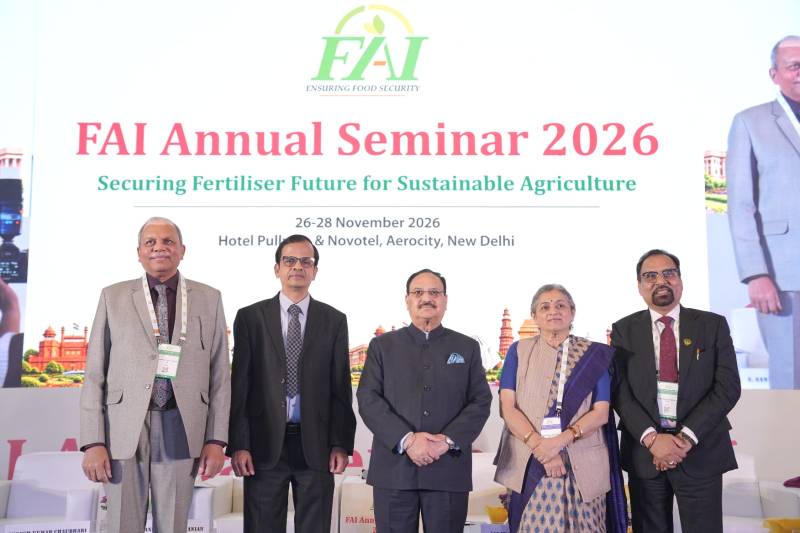
New Delhi, Nov 29 (TNT): India plans to set up six new urea plants with an investment of Rs 54,000 crore to strengthen domestic fertiliser production and reduce dependence on imports amid global supply uncertainties, Union Minister for Chemicals and Fertilisers Jagat Prakash Nadda said on Sunday.
Addressing the 62nd Annual Seminar of the Fertiliser Association of India (FAI) in New Delhi, Nadda said the government and fertiliser industry had jointly overcome recent supply challenges, ensuring timely availability of fertilisers to farmers while protecting them from price fluctuations.
Urea was being supplied at Rs 266.60 per bag, while the subsidy on Di-Ammonium Phosphate (DAP) was around Rs 3,000 per bag, he said.
Six fertiliser plants had been established over the past decade, while another six were planned, reflecting the government’s commitment to strengthening domestic production and ensuring affordable fertiliser availability, he added.
The three-day seminar, held under the theme “Securing Fertiliser Future for Sustainable Agriculture”, brought together over 1,800 delegates, including government officials, scientists, industry representatives and 117 international participants from around 26 countries.
Fertiliser Secretary Rajat Kumar Mishra said 87 per cent of fertiliser buyers were small and marginal farmers, making affordable and timely availability crucial for agricultural productivity and food security.
He stressed the need to strengthen supply chains and monitoring mechanisms to ensure subsidised fertilisers reached their intended beneficiaries.
FAI Chairman and Coromandel International MD and CEO S. Sankarasubramanian said the proposed investments in urea plants, phosphatic fertilisers and intermediates would enhance domestic availability and protect farmers against geopolitical uncertainties and global supply disruptions.
FAI Director General Suresh Kumar Chaudhari said India continued to depend on imports for fertiliser requirements and needed to diversify raw material sources, strategically plan imports and forge partnerships with resource-rich countries to strengthen supply security.
Four technical sessions deliberated on fertiliser policy and nutrient security, food security, sustainable fertiliser production and changing trends in fertiliser marketing.
The seminar also discussed sustainable manufacturing, green fertilisers, responsible marketing and strengthening global supply chains.
FAI released several publications, including Fertiliser Statistics 2025-26, Specialty Fertiliser and Micronutrient Statistics 2025-26, the Fertiliser (Control) Order 1985 and a compendium titled “Samriddh Dharti”.
Awards were also presented recognising achievements in fertiliser production, technical innovation, safety, environmental protection, digital farming and promotion of bio and organic fertilisers.
TNT KM