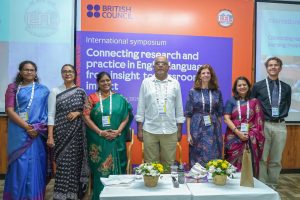
Hyd: British Council, EFLU hold international symposium on English language education
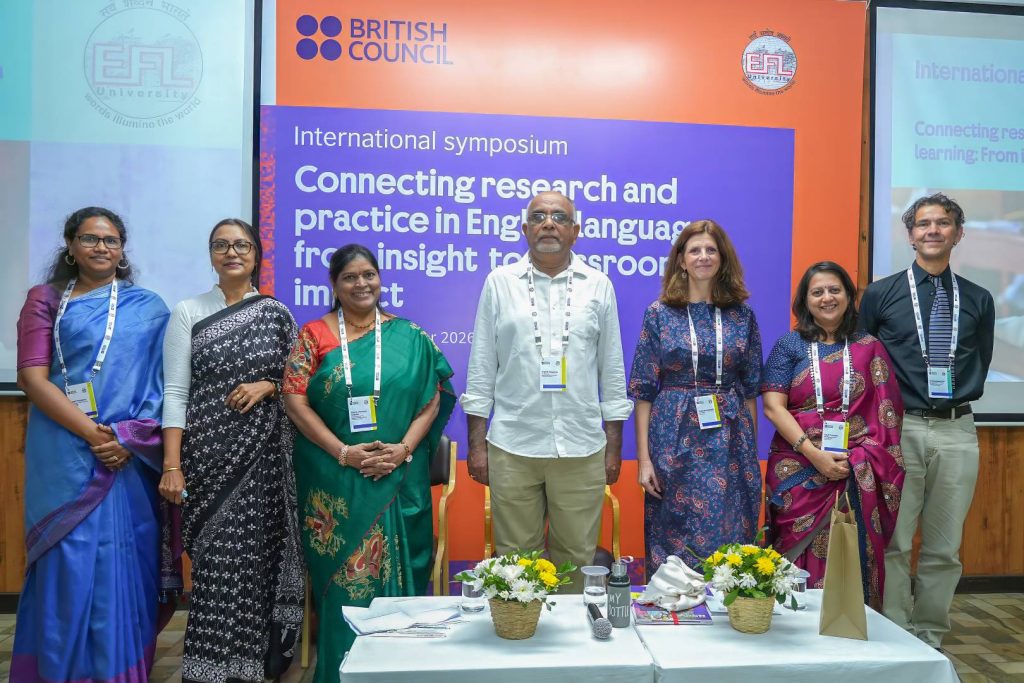
The symposium, titled “Connecting Research and Practice in English Learning: From Insight to Classroom Impact”, was held on November 25 and 26, bringing together researchers, teacher educators, teachers, school leaders, representatives of educational institutions and policy stakeholders from India and abroad.
The deliberations focused on translating research and policy objectives into effective classroom practices, strengthening teacher education and promoting inclusive and multilingual approaches to language learning.
Participants discussed the importance of equipping teachers and teacher educators with the necessary skills, knowledge and pedagogical flexibility to address diverse classroom requirements.
The discussions also highlighted the role of foundational language learning in shaping children’s academic performance and future opportunities.
The symposium covered five key themes, including inclusive and language-responsive teaching, teacher education and evidence-based practices, assessment for learning, human-centred artificial intelligence (AI) and responsible innovation, and learner participation and communication.
Alison Barrett MBE, Country Director, British Council India, said meaningful progress in English education depended on translating research and policy into approaches that teachers could apply in their everyday classroom practices.
The symposium provided an opportunity for researchers, policymakers and practitioners to exchange ideas and explore ways to make English learning more inclusive and effective, she said, reaffirming the British Council’s commitment to working with EFLU and other educational institutions to strengthen professional practices.
In his inaugural address, EFLU Vice-Chancellor Prof N Nagaraju stressed the need to bridge academic research and classroom realities to ensure that scholarly insights translated into tangible learning outcomes.
He said the use of technology in classrooms should remain ethical and equitable without displacing teachers or widening existing educational inequalities.
Learners’ home languages should also be recognised as valuable resources in the learning process, he added.
Referring to the National Education Policy (NEP) 2020 and India-UK Vision 2035, he emphasised the importance of bringing researchers, teacher educators and grassroots-level teachers together to strengthen language education.
The symposium featured a keynote address by Prof Graham Hall and sessions led by experts and practitioners, including Kshema Jose of EFLU and Purbani Das of the British Council, who discussed human-centred AI and responsible innovation.
Other speakers included Dr Gayathri Raman, Dr Asma Rasheed, Dr Padmini Boruah, Dr Padmini Shankar, Preeti Hingorani and Dr Vijaya, who shared their perspectives on multilingual learning, inclusive education, teacher development and learner participation.
The organisers said recordings of key sessions would be made available to extend the reach of the discussions and share the findings with the wider education community.