Hyd: India needs higher public healthcare spending, focus on preventive care: FDR Founder Jayaprakash Narayan
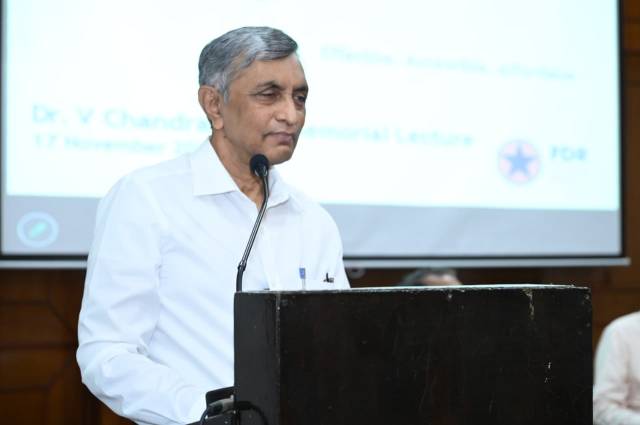
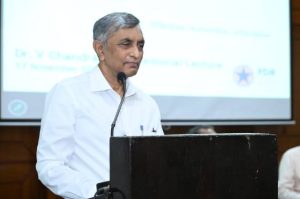
Delivering the Dr V Chandramowli Memorial Lecture on ‘Towards Viable Universal Healthcare – Effective, Accessible, Affordable’ at the Administrative Staff College of India (ASCI) here, he proposed an integrated four-tier healthcare system covering preventive, primary, secondary and tertiary care.
He said India’s out-of-pocket expenditure as a share of total health expenditure had declined from 64.2 per cent in 2013-14 to 42.7 per cent in 2023-24, indicating progress in expanding healthcare coverage.
Under Ayushman Bharat, 48.5 crore health cards had been issued and 13.25 crore hospital admissions funded, involving an expenditure of ₹2.03 lakh crore as of September 2026, Dr Jayaprakash, also the founder of Loksatta Party, he said.
However, non-communicable diseases, including diabetes, hypertension, cardiovascular diseases, stroke and cancer, accounted for nearly two-thirds of deaths in the country, highlighting the need for greater emphasis on prevention and early detection.
Explaining his proposed framework, he called for establishing community wellness centres to provide preventive care, nutrition, immunisation, health screening and monitoring of chronic diseases.
He also proposed a publicly funded network of family practitioners as the first point of contact for patients, supported by affordable medicines, diagnostic facilities and a structured referral system.
The framework envisages expanding affordable secondary healthcare through public health insurance and empanelling smaller private nursing homes, particularly in smaller towns, besides strengthening specialised government hospitals, medical education and research facilities.
Referring to Singapore’s healthcare model, he highlighted the importance of universal coverage, personal responsibility, affordable treatment, strong primary care and an effective referral mechanism.
Estimating the investment required for the proposed framework at around ₹2.13 lakh crore, he said it would account for approximately 0.5 per cent of GDP after five years, assuming real economic growth of seven per cent.
He suggested implementing the plan in phases over three to five years.
He said early intervention and effective management of chronic diseases could reduce dependence on expensive tertiary healthcare and ease the financial burden on individuals and the public healthcare system.
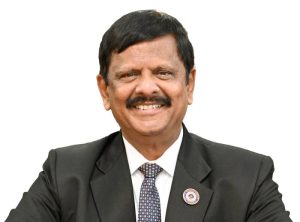
ASCI Chairman Padmanabhaiah and Director General Dr N Ramesh Kumar attended the lecture. Padmanabhaiah presented a memento to the speaker, while Dr P Nabhabhushanam, President of Essential Medical Services (Trust), proposed the vote of thanks.
The memorial lecture was organised by ASCI under the endowment of Essential Medical Services (Trust).