India must develop indigenous advanced inspection technologies for defence self-reliance: Rajnath Singh
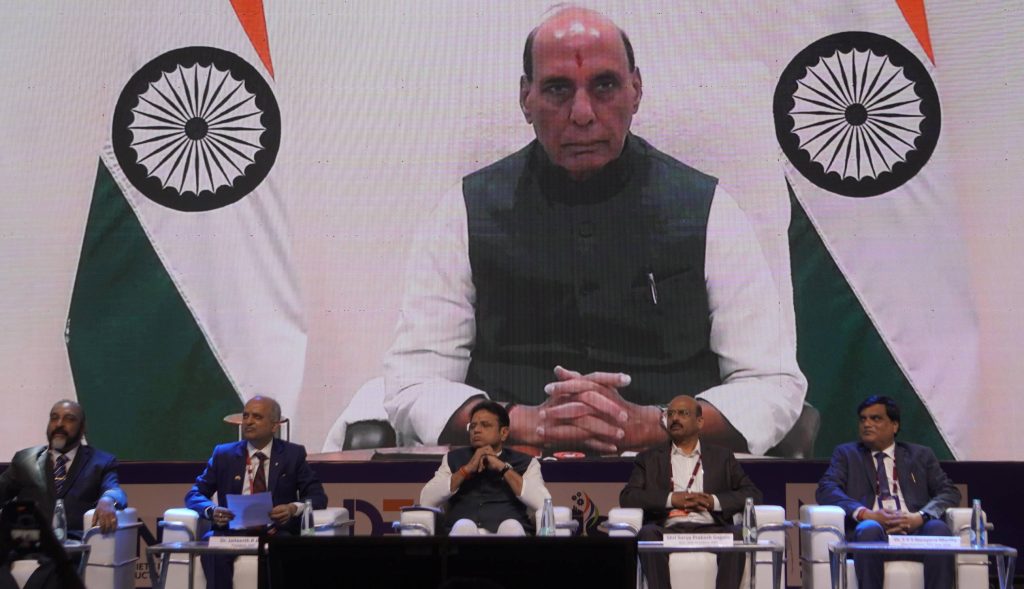
Virtually addressing the inaugural session of the 36th Annual Conference on Non-Destructive Evaluation (NDE 2026) and the 15th International Symposium on NDT in Aerospace (AeroNDT 2026) here, he said self-reliance in advanced inspection technologies was a strategic necessity for strengthening India’s defence preparedness and securing critical supply chains.
The three-day international conference, organised by the Indian Society for Non-Destructive Testing (ISNT) at the HITEX Exhibition Centre from November 15 to 17, has brought together more than 2,000 professionals, researchers, industry experts and students, besides over 100 exhibitors from India and abroad.
Rajnath Singh stressed the need to develop indigenous specialised sensors, inspection equipment, evaluation technologies and associated software to reduce technological dependence on other countries.
He also called for consistent quality assurance practices across defence public sector undertakings, private manufacturers, start-ups and micro, small and medium enterprises, emphasising that inspection results must be accurate, reliable and traceable.
Explaining the significance of NDT, he said the technology enabled the examination of materials, components and structures without damaging them. It helped identify hidden defects in critical equipment without dismantling them, much like medical imaging techniques used to examine the human body.
He cautioned that undetected defects in missiles, aircraft, naval platforms and spacecraft could affect operational availability, increase maintenance requirements and jeopardise mission success.
The Defence Minister said India must move from merely identifying defects to preventing them by incorporating quality assurance at every stage of manufacturing.
He said emerging technologies such as Artificial Intelligence, Machine Learning, robotics, advanced sensors, digital twins and predictive analytics were transforming inspection processes by improving accuracy, efficiency and structural health monitoring.
Calling for greater investment in research, advanced equipment, software and skilled manpower, he said India should develop indigenous solutions suited to its strategic and industrial requirements and make them available to international markets.
Referring to India’s achievements in missile development, aerospace engineering, naval platforms and space applications, he cited the commissioning of INS Vikrant as a major milestone in the country’s self-reliance journey.
Initiatives such as Innovations for Defence Excellence (iDEX) and the Technology Development Fund (TDF) were also encouraging innovation in the defence sector, he added.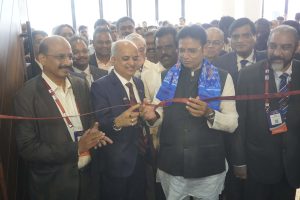
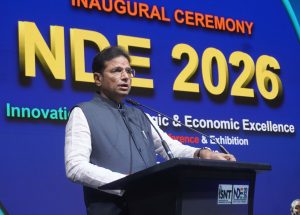
Telangana Minister for IT and Industries D Sridhar Babu, who attended as Guest of Honour, said Hyderabad was rapidly emerging as a major aerospace and defence manufacturing hub.
He said Telangana had more than 1,500 aerospace, defence and space-related MSMEs, while aircraft, spacecraft and their components accounted for 29.4 per cent of the state’s merchandise exports in 2024-25, valued at nearly Rs 63,000 crore.
Highlighting the presence of companies such as Tata Boeing Aerospace and Safran, besides space technology firms including Skyroot Aerospace, he said the growing aerospace ecosystem offered significant opportunities for advanced testing, evaluation and certification.
Sridhar Babu assured the State Government’s support for ISNT’s proposal to establish a Centre of Excellence in Non-Destructive Testing in Telangana.
Under the Telangana Rising 2047 vision, the government aimed to develop the state into a global aerospace and defence hub covering design, engineering, manufacturing, testing, certification and research, he said.
He invited the NDT industry and research fraternity to partner with the state in strengthening these capabilities.
ISNT President Dr Jaiteerth R Joshi, who is also DRDO Director General and CEO and Managing Director of BrahMos Aerospace, said NDT professionals played a crucial role in ensuring the safety and reliability of critical infrastructure and equipment, including jet engines, nuclear reactors, missiles and bridges.
He said ISNT had trained around three lakh people over the past four decades and contributed significantly to developing India’s NDT professional ecosystem.
The inaugural session also featured the presentation of ISNT National NDT Awards 2026, recognising contributions to research and development, industrial applications, scientific publications and professional excellence.
P Vijayaraghavan received the Lifetime Achievement Award, while the ISNT Hyderabad Chapter was honoured with the Best Chapter Award for 2026.
The conference features technical presentations, plenary sessions, poster presentations, industry interactions and an exhibition showcasing developments in non-destructive testing and evaluation.
Established in 1972, ISNT is a non-profit professional organisation with more than 5,000 members across 19 chapters in India.
It promotes NDT technologies through education, research and technical collaboration, contributing to industrial safety, quality assurance and asset reliability.