
Enterprise AI adoption outpaces validation and trust mechanisms, finds QualiZeal-HFS study
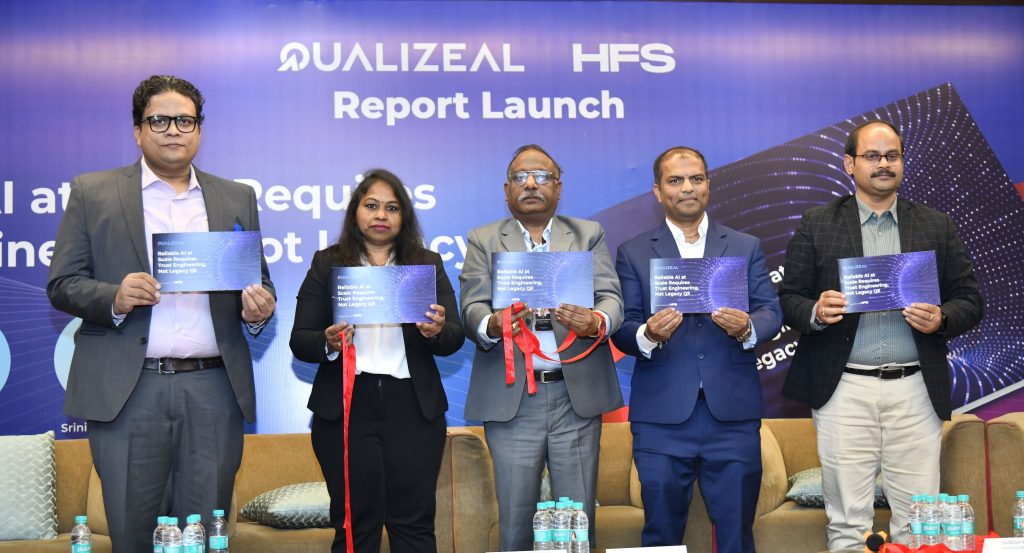
Hyderabad, Nov 11 (TNT): Enterprise adoption of artificial intelligence (AI) is advancing faster than the mechanisms required to validate, govern and ensure its reliability, with only 15 per cent of organisations having a dedicated approach to AI testing, according to a joint study report released by QualiZeal and HFS Research.
The study, titled ‘HFS Take 5 x QualiZeal’, surveyed 101 enterprise quality and technology leaders in the US and highlighted a widening gap between AI deployment and quality assurance mechanisms.
It found that 57 per cent of enterprises were running generative AI in some form of production, while 36 per cent had deployed agentic AI systems. However, 52 per cent were testing probabilistic AI systems using frameworks designed for conventional software, indicating gaps in validation approaches.
The study also revealed that 37 per cent of enterprises were running AI in production without a designated function accountable for its quality.
While 88 per cent of organisations measured model accuracy, only 47 per cent assessed bias and fairness, 37 per cent measured explainability and 35 per cent could provide evidence of regulatory compliance.
Commenting on the findings, QualiZeal Co-Founder, Executive Director and CEO Kalyan Konda said enterprises had moved AI into production much faster than they had developed the necessary governance and quality assurance practices.
He stressed that accountability for AI quality had become a boardroom issue rather than merely a software testing concern, highlighting the need for clearly defined responsibilities and appropriate validation frameworks.
QualiZeal Co-Founder and Head of India Operations Madhu Murty said quality engineering was undergoing a fundamental transformation, with engineers increasingly required to assure the reliability and trustworthiness of AI systems rather than conventional software alone.
The study found that 82 per cent of enterprises expected the role of quality engineering to grow significantly. However, only 24 per cent reported receiving resources proportionate to the expanded responsibilities.
Hansa Iyengar, Practice Leader at HFS Research, said enterprises needed to go beyond measuring AI accuracy and demonstrate that their systems were fair, explainable and compliant with regulatory requirements.
The study called for dedicated accountability for AI quality, specialised testing frameworks suited to probabilistic systems and increased investment in quality engineering to ensure trusted, production-ready AI.
QualiZeal said its AI ecosystem, including QMentisAI and ValidAIte, was designed to help enterprises integrate AI-led quality engineering and assurance into their delivery and governance processes.
TNT TS