SLBC tunnel work crosses major geological hurdle, pace to accelerate: Uttam
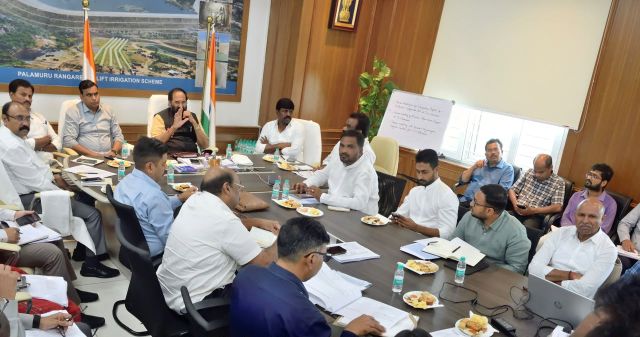
Hyderabad, Oct 4 (TNT): Irrigation and Civil Supplies Minister N Uttam Kumar Reddy on Sunday said excavation of the Srisailam Left Bank Canal (SLBC) tunnel had crossed a major geological hurdle, paving the way for faster progress with additional equipment and improved excavation cycles.
Reviewing the progress of key irrigation projects with elected representatives and senior officials of erstwhile Nalgonda district, the Minister said the SLBC project was expected to deliver more than 30 TMC of water to the drought-prone upland areas.
The project team reported that excavation had advanced by around 700 metres over the past five to six months, including 450 metres from the outlet and 250 metres from the inlet.
The 43.968-km main tunnel was around 79 per cent complete, with approximately 9.1 km of excavation remaining, officials said.
The excavation had recently crossed a major shear zone, where unstable geological conditions had posed significant technical and safety challenges.
Col Parikshit Mehra, an Indian Army tunnel expert overseeing the operations, said excavation at the inlet had initially been slowed due to weak ground conditions, rock bursts and safety concerns following the incident in which the tunnel-boring machine became stuck.
To negotiate the unstable stretch, the team installed 140-mm seamless pipes to form an umbrella canopy ahead of excavation. Reinforced ribs, staged excavation, probe drilling and additional support measures were also adopted to control risks.
Uttam Kumar directed officials and the contractor to deploy additional equipment and improve excavation cycles while maintaining strict safety standards for workers operating deep inside the tunnel.
The current combined excavation rate was around eight metres a day, with a sustained average of seven to 7.5 metres, while progress had touched 10 metres on one or two days, officials said.
A three-arm drilling boomer was already operating at the outlet, while another was expected to arrive at the inlet in October. Electric loaders and advanced excavators were also being deployed.
A locomotive ordered from Germany was expected to arrive by the end of October and was likely to improve the removal of excavated material and reduce construction time.
Transportation of excavated material over distances of up to 21 km remained a major constraint. The construction cycle, which earlier took around 48 hours, had been reduced to 20-24 hours. With improved equipment and faster material removal, the project team expected to bring the cycle down to around 10 hours from late October or early November.
The Minister said he hoped that breakthrough in Tunnel 1 would be achieved by May-June 2028 and directed officials to work towards the target of delivering water by June 2028.
He also directed officials to complete works on Tunnel 2, the balancing reservoir and other associated components in time so that they did not delay water delivery.
Tunnel 2, which is around 7.1 km long, has resumed lining work after a prolonged interruption, officials said.
Uttam Kumar stressed that worker safety should remain the top priority while accelerating the execution of the project.
TNT TS